

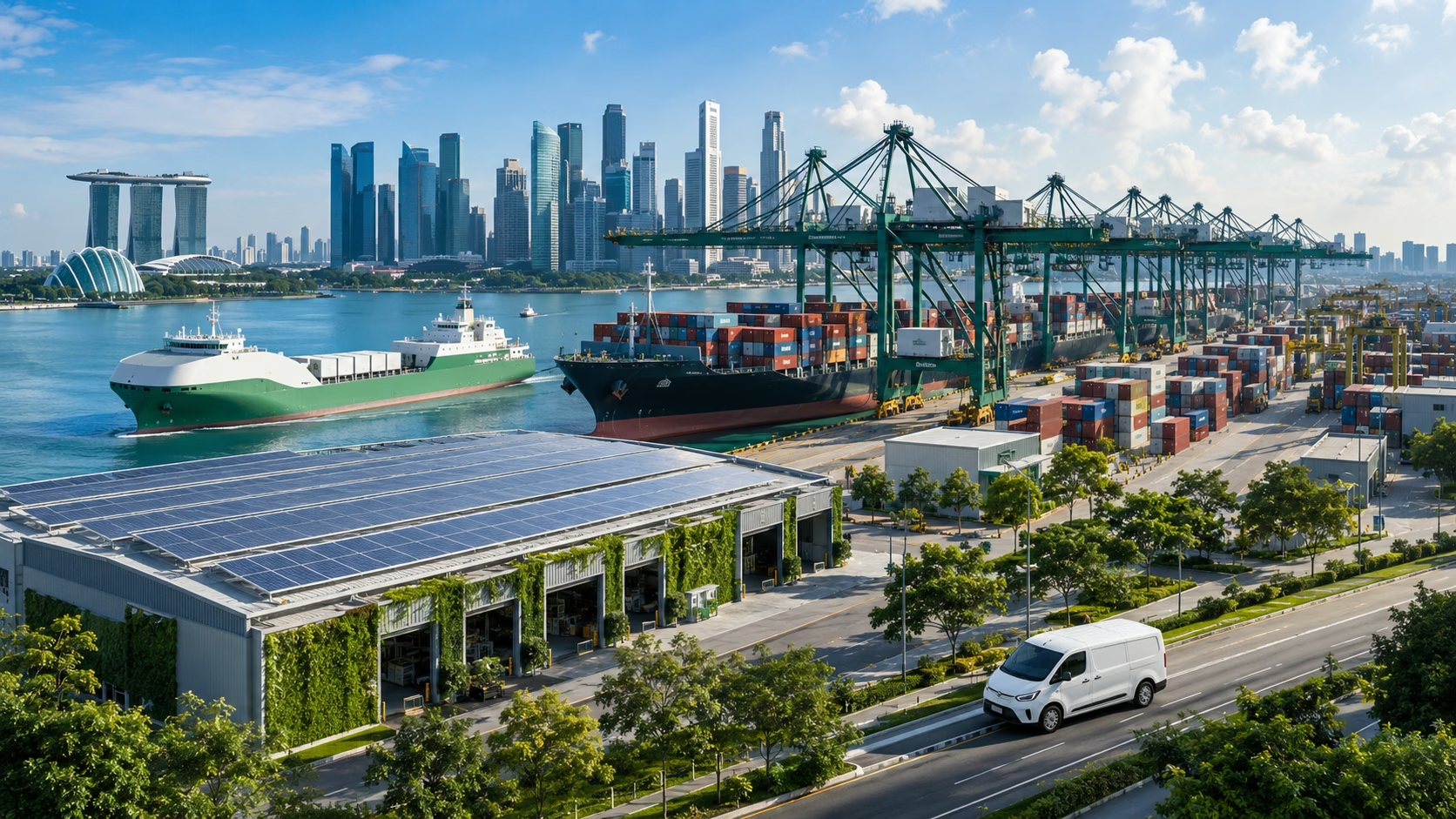
The logistics industry has long been viewed as a carbon villain. The ships, planes, and trucks that power global trade are significant emitters of greenhouse gases. However, in Singapore, the narrative is shifting. The city-state’s logistics companies are aggressively positioning themselves as the architects of a greener global supply chain, leveraging green financing and technology to turn sustainability into a competitive advantage. This transformation is not just about corporate social responsibility; it is about future-proofing an industry against impending carbon taxes and changing consumer preferences.
Decarbonizing the Maritime Fleet
As the world’s largest bunkering hub, Singapore plays a pivotal role in the decarbonization of shipping. The Maritime and Port Authority of Singapore (MPA) has been aggressive in pushing for the adoption of alternative fuels such as methanol, ammonia, and LNG.
Singaporean logistics firms are responding by future-proofing their fleets. Companies are moving beyond compliance to offer “green logistics” packages to clients. These packages calculate the carbon footprint of a shipment and offer offsets or alternatives via biofuel-powered vessels. This is becoming a key differentiator for multinational corporations that are bound by their own ESG (Environmental, Social, and Governance) reporting requirements.
Green Warehousing and Last-Mile Delivery
The push for sustainability extends inland. Singapore is home to some of the most energy-efficient warehouses in Asia. Logistics property developers are integrating solar panels, smart lighting, and rainwater harvesting systems into their designs. However, the innovation goes deeper.
The adoption of electric vehicles (EVs) for last-mile delivery in Singapore is accelerating rapidly. Coupled with route optimization software that reduces mileage, these firms are significantly cutting urban emissions. This is critical as the volume of e-commerce parcels continues to spike, increasing the number of delivery vehicles on the road.
The Financing Angle
A key driver of this green shift is the availability of capital. Singapore has established itself as a hub for green finance in Asia. Banks are offering lower interest rates for “sustainability-linked loans” to logistics companies that can demonstrate measurable improvements in their carbon efficiency.
According to a report by the Singapore Green Building Council, investment in green logistics infrastructure is expected to double by 2028. This influx of capital allows Singaporean firms to adopt expensive new technologies faster than their regional competitors, cementing their lead in the high-end logistics market.
A Strategic Imperative
For Singapore’s logistics sector, going green is no longer a moral choice; it is a strategic imperative. As the European Union implements carbon border taxes and global brands demand greener supply chains, the only way for trade to flow through Singapore is to clean it up. By leading the charge, Singaporean companies ensure they remain the gateway of choice for the world’s most valuable cargo.











Leave a Reply