


Singapore has developed into a leading destination for professionals, entrepreneurs, and multinational companies because it offers a rare combination of political stability, efficient systems, high-quality infrastructure, and access to Asian markets. The country’s economy is not dependent on one single sector. Instead, it is supported by several advanced industries that continue to create employment opportunities and help companies expand regionally. Understanding these industries is important for job seekers, investors, and businesses that want to grow in a competitive environment.
Financial services continue to be one of the most influential industries in Singapore. The country is home to international banks, private wealth firms, insurance companies, investment institutions, and fast-growing fintech businesses. This industry provides career opportunities in corporate banking, investment analysis, wealth management, financial technology, compliance, risk control, and digital payment systems. As financial companies adopt artificial intelligence, automation, and stronger cybersecurity tools, the demand for professionals with both finance and technology knowledge is increasing. For companies, Singapore offers credibility, strong legal protection, and access to clients across Southeast Asia and beyond.
The information technology sector is also growing rapidly. Singapore’s focus on becoming a highly digital economy has created demand for professionals who can support digital transformation in both private and public sectors. Companies need software developers, data analysts, cybersecurity experts, cloud specialists, systems architects, AI engineers, and digital transformation consultants. This growth is not limited to technology companies alone. Banks, hospitals, logistics firms, schools, retailers, and government-linked organizations all require digital solutions. Because of this, technology skills have become valuable across almost every major industry in Singapore.
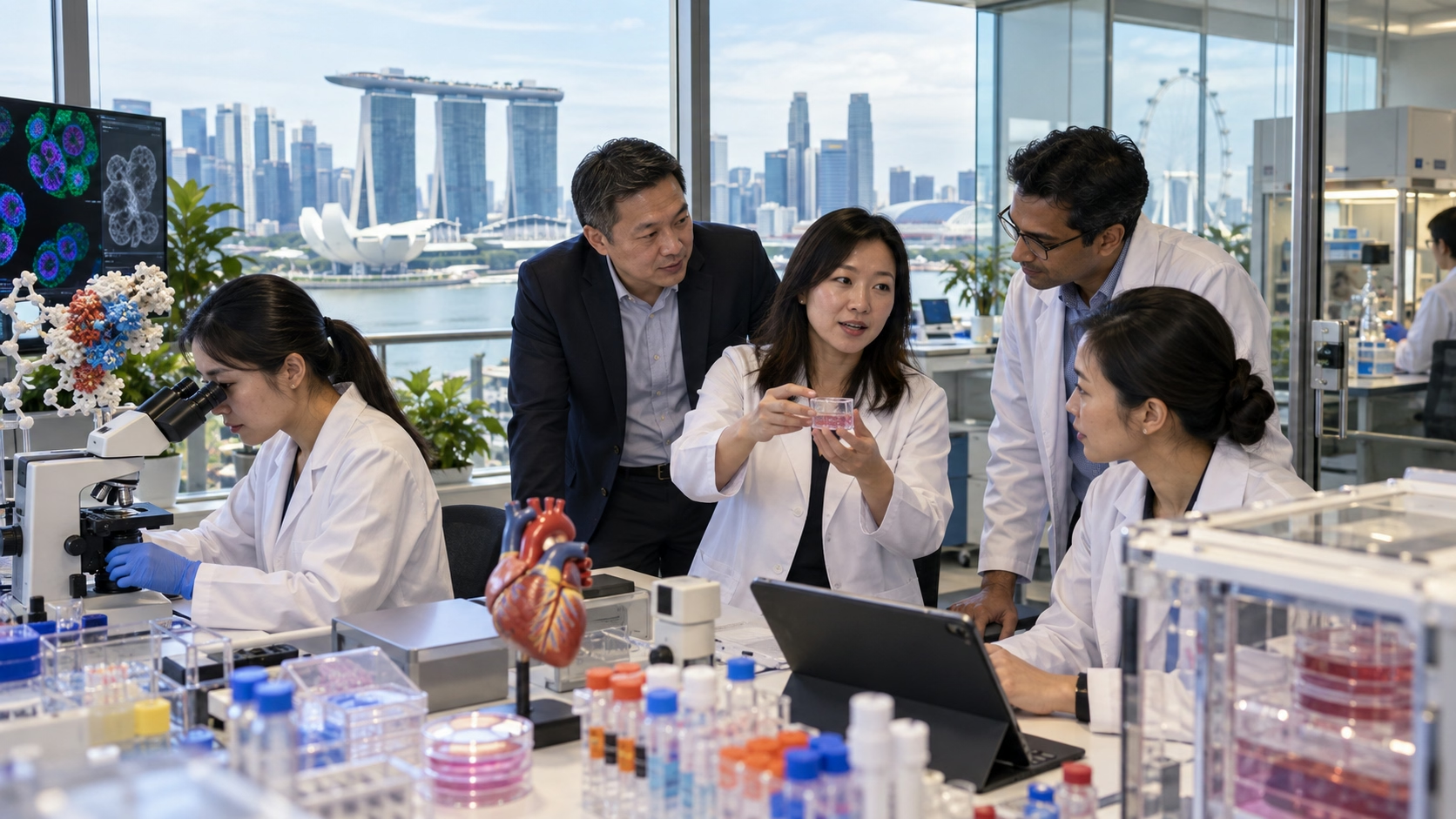
Healthcare, biotechnology, and pharmaceuticals represent another strong area for professional and corporate growth. Singapore has positioned itself as a trusted location for medical research, drug development, healthcare services, and medical technology. The industry offers career paths in biomedical science, laboratory testing, clinical research coordination, healthcare management, pharmaceutical manufacturing, regulatory affairs, and medical device development. Demand is supported by aging populations in the region, rising healthcare expectations, and the need for innovative treatment solutions. Businesses in this field can use Singapore as a base for research, production, and regional healthcare partnerships.
Logistics and supply chain management are central to Singapore’s role as a global trade hub. The country’s port, airport, warehousing systems, and customs efficiency make it highly attractive for companies that move goods across Asia and the world. Career opportunities exist in shipping coordination, freight forwarding, procurement, supply chain analytics, warehouse automation, inventory planning, and regional distribution management. As e-commerce grows and companies look for more reliable supply networks, Singapore’s logistics industry remains highly relevant.
Advanced manufacturing is another industry with strong potential. Rather than competing mainly on low-cost labor, Singapore focuses on precision, automation, quality, and innovation. Key areas include semiconductors, electronics, aerospace engineering, robotics, and high-tech equipment. This creates demand for mechanical engineers, electrical engineers, automation technicians, process improvement specialists, product designers, and quality assurance professionals. Companies benefit from a strong technical workforce and an ecosystem that supports research and high-value production.
Sustainability is becoming a major business priority in Singapore. Opportunities are increasing in renewable energy, carbon management, green buildings, sustainable finance, recycling systems, and water technology. Professionals who understand ESG standards, environmental planning, energy efficiency, and sustainability reporting can find growing career prospects. Companies that offer climate-related solutions may also gain advantages as more organizations commit to responsible business practices.
Singapore’s future career market will reward people who combine technical expertise, adaptability, communication skills, and regional awareness. For businesses, the country remains a powerful platform for entering Asian markets, testing innovative ideas, and building long-term growth in industries that continue to evolve.











Leave a Reply