

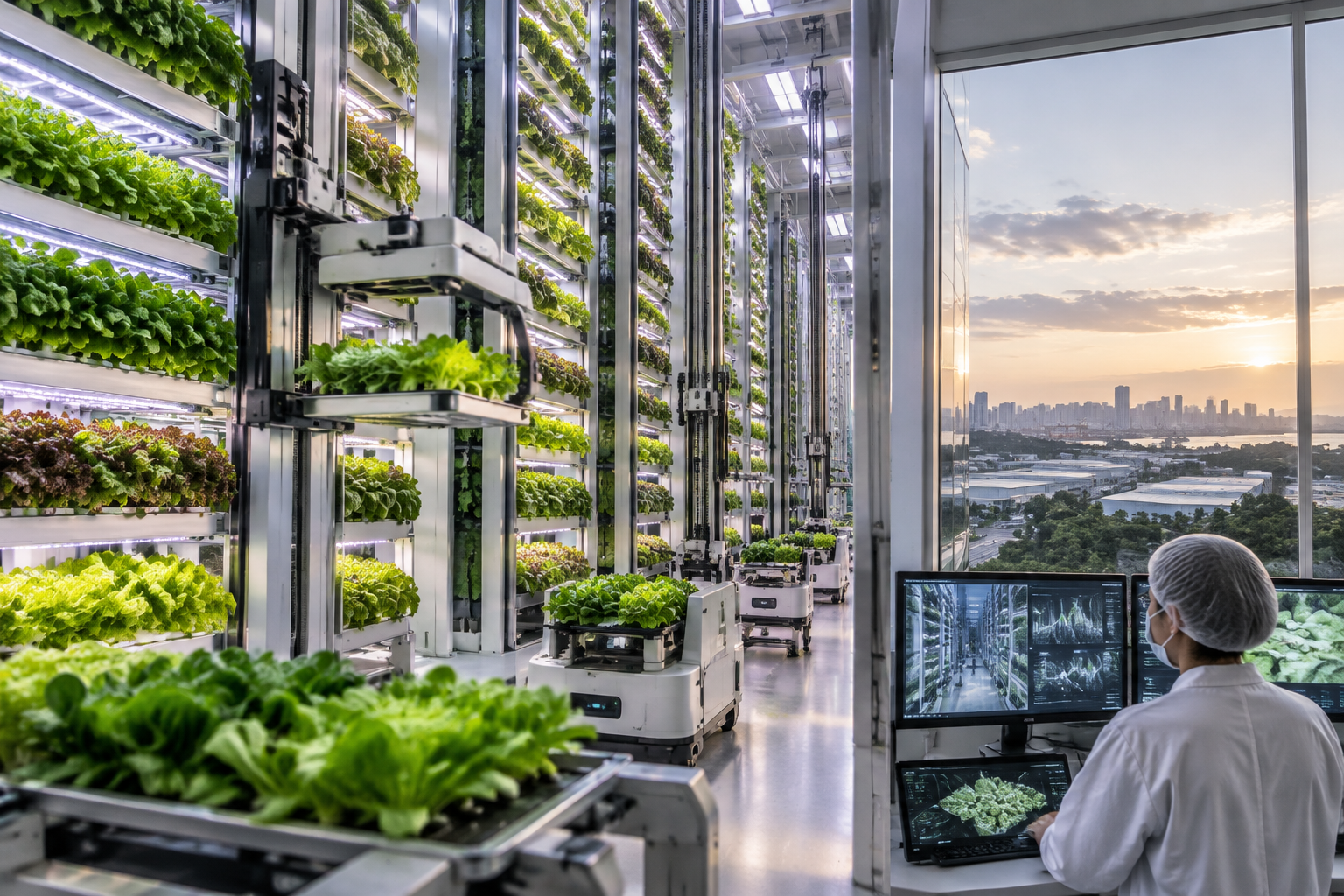
Government Backing: The Agri-Food Cluster Transformation Fund
Singapore’s agritech ecosystem is powered by a robust framework of public-private partnership. In March 2026, the government announced a substantial S$70 million extension of the Agri-Food Cluster Transformation Fund, to be disbursed over five years . This second tranche aims to co-fund local farms in adopting advanced technologies—from LED grow lights and automated feeders to large-scale climate-controlled farming systems—that boost productivity and resilience .
The fund’s first tranche, launched in 2021, had already awarded S$55 million to nearly 150 projects, demonstrating a sustained commitment to transforming the sector . A new component of the fund will focus on strategic partnerships and industry-wide solutions, encouraging collaboration to overcome challenges like limited economies of scale . This government support provides a crucial safety net and catalyst for innovation, de-risking investment for private players.
Venture Capital and Startup Success Stories
Beyond government grants, private capital is also flowing into promising Singaporean agritech ventures. A standout example from 2026 is Rize, a startup focused on sustainable, low-methane rice farming. In July 2026, Rize successfully raised $31 million in Series B funding, led by BNP Paribas Asset Management and backed by heavyweights like Temasek and the Rockefeller Foundation . This significant investment underscores the growing commercial viability and global relevance of Singapore’s agritech solutions.
Another notable case is Polybee, which raised $4.3 million in seed funding in February 2026. The company uses tiny drones as “physical AI agents” for pollination and yield forecasting in greenhouses and open fields, a technology that has demonstrated up to a 3x profit improvement for growers . These examples highlight a maturing ecosystem where innovative ideas can attract serious capital.
The Strategic Imperative Behind the Investment
The influx of capital, both public and private, is not just about business. It is a direct response to a strategic imperative: ensuring Singapore’s food security. With less than 1% of its land available for agriculture, the nation must rely on technology to overcome its natural constraints . Investments in agritech are therefore seen as investments in national resilience. By supporting startups like Rize and Polybee, Singapore is not only building a local industry but also positioning itself as a hub for agritech innovation that can be exported to address food challenges across Asia and beyond.









Leave a Reply