

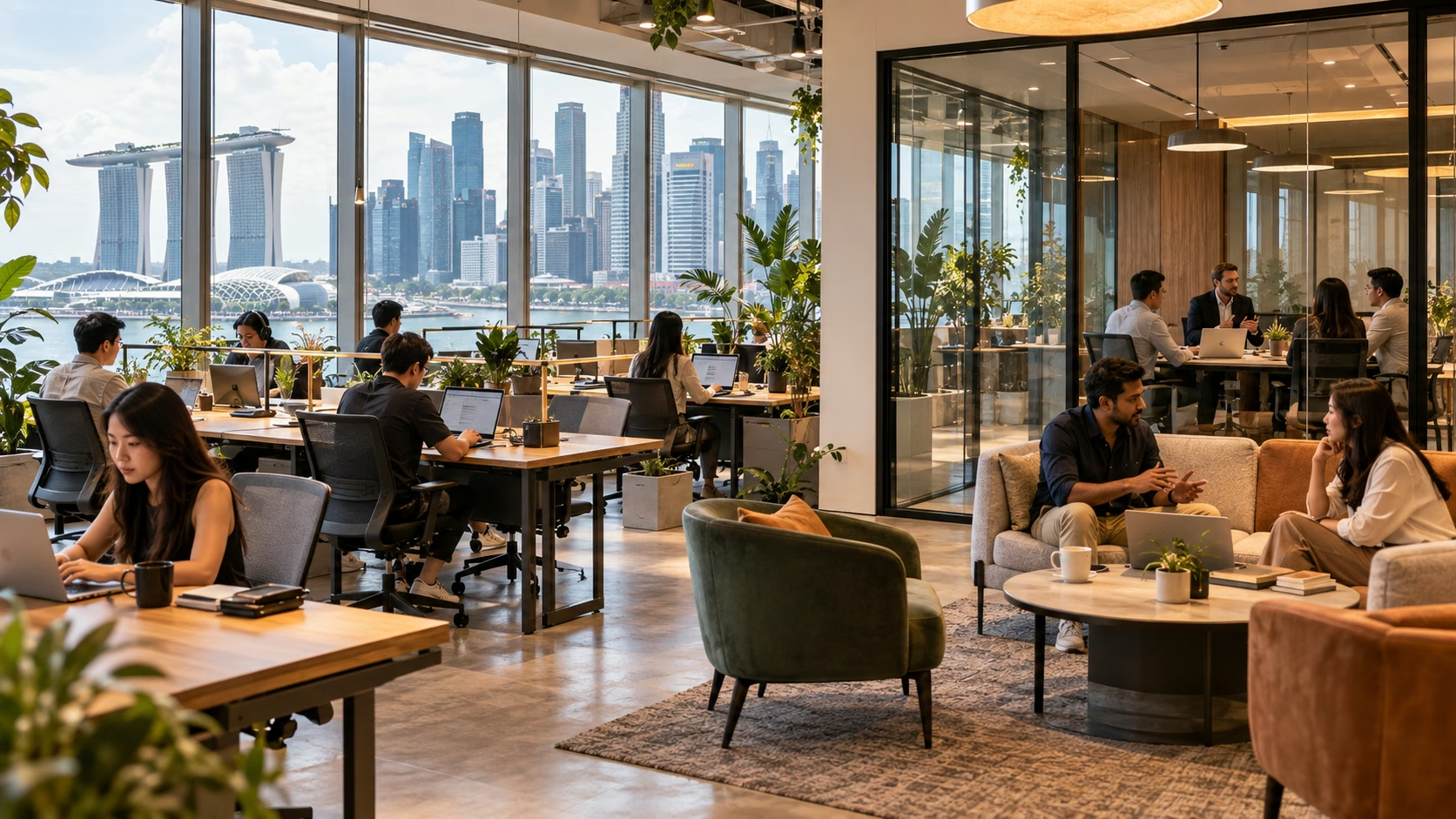
A structural shift is underway in Singapore’s coworking geography. The Central Business District still anchors the market, accounting for 50 percent of total flexible workspace demand. But Jurong, the western region long associated with industrial estates and HDB heartlands, is now the fastest-growing coworking hub in the country.
The Numbers Behind the Shift
Demand for flexible workspace in Jurong surged 142 percent in 2025 compared to 2024, followed by a further 22 percent rise in the first quarter of 2026. Jurong now represents 17 percent of Singapore’s total flex demand—second only to the CBD—ahead of Marina Bay (13 percent), One-North (11 percent), and Tanjong Pagar (9 percent).
Desk rates tell the same story from the affordability side. A desk in Jurong averages US$532 per month, compared to US$779 in Marina Bay and US$737 in the CBD. For a ten-person startup, that is a monthly saving of over US$2,000—enough to fund a junior developer’s salary or a quarter of cloud infrastructure costs.
The Live-Work-Play Proposition for Founders
Jurong’s appeal is not purely financial. The Instant Group’s 2026 report describes Jurong as increasingly establishing itself as a core business hub in its own right, particularly for companies prioritising proximity to residential, retail, entertainment, and green space areas.
For startup founders working 80-hour weeks, the practical implications are significant. Being able to walk from a coworking desk to a lunch appointment at JEM or Westgate, followed by an evening workout at Jurong Lake Gardens, removes the commute friction that erodes productivity in CBD-based setups. Employees who live in the west—a large proportion of Singapore’s workforce—gain back two hours of their day.
The “Live-Work-Play” Format Is Spreading
The Jurong trend reflects a broader APAC shift toward decentralised business hubs. Companies are increasingly opting for environments that blend professional and personal life, and coworking operators are following the demand. JustCo has confirmed additional openings in Singapore for late 2026, and The Instant Group expects the momentum to accelerate well into 2027.
This is not a fringe phenomenon. It is a deliberate real estate strategy. Longer commitments to flexible workspace—average contract lengths increased from 10.8 months in 2023 to 12.7 months in 2025—signal that companies are embedding coworking into long-term operational planning rather than treating it as a short-term stopgap.
What Founders Gain by Choosing Jurong
A startup that bases itself in Jurong gains a cost structure that extends runway, a talent pool of western-region residents who prefer local work, and proximity to JTC’s LaunchPad @ one-north ecosystem, which is a short MRT ride away. The trade-off is reduced walk-by investor traffic compared to Raffles Place. But for a B2B SaaS startup selling to enterprise clients—most of whom will join a Zoom call anyway—the CBD premium is increasingly difficult to justify.
The 142 percent surge is not a pandemic-era anomaly. It is a permanent rebalancing of where Singapore’s startup economy physically operates.









Leave a Reply