

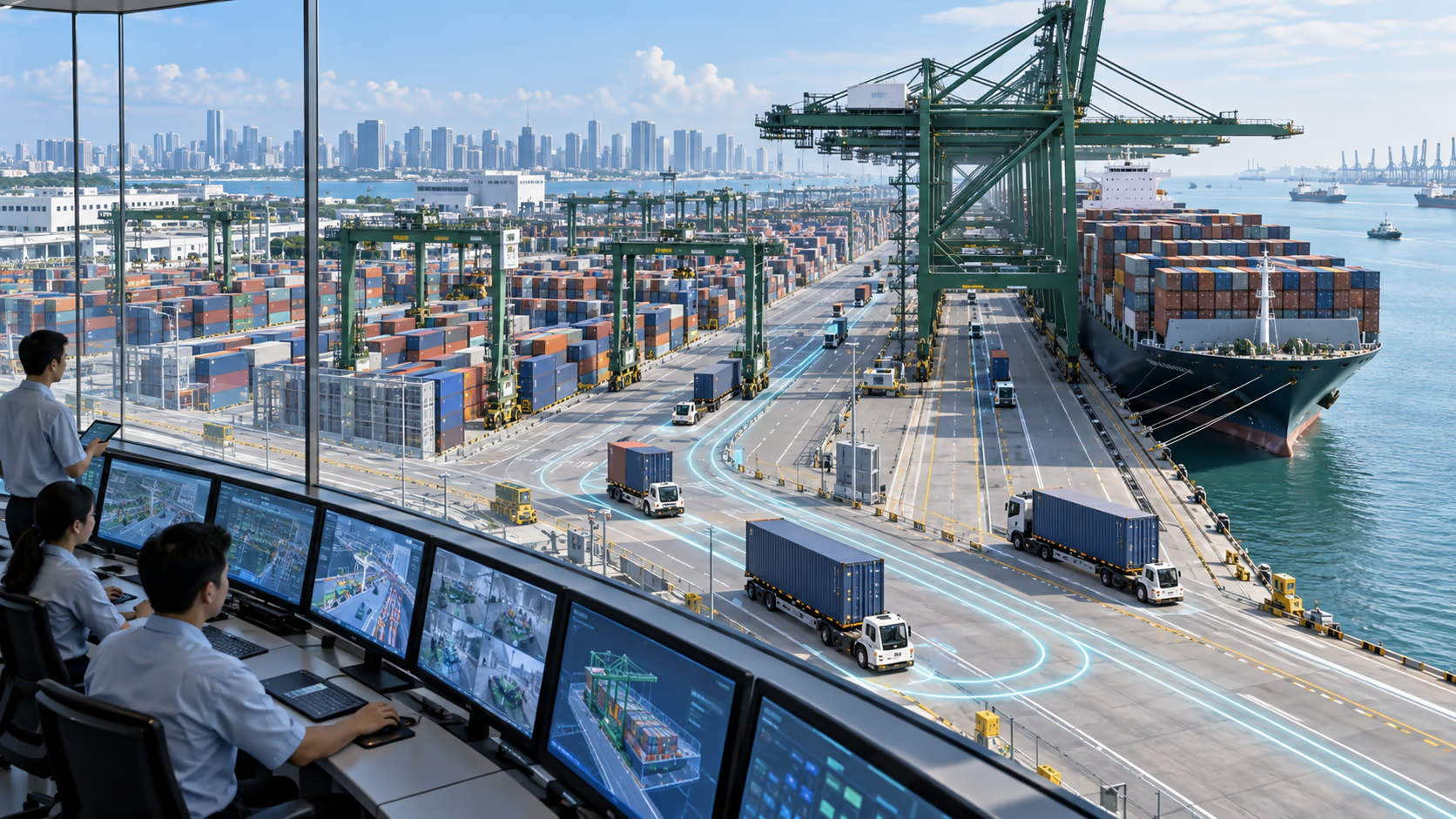
Singapore’s maritime dominance is not just about the cargo on the quayside; it is about managing a complex ecosystem of ships, bunkers, and underwater infrastructure. With thousands of vessels passing through the Singapore Strait weekly, monitoring for illegal activities, oil spills, and maintenance issues is a monumental task. Increasingly, the city-state is turning to a fleet of autonomous robots—both aerial and submersible—developed by a dynamic cluster of deep-tech startups.
Aerial Surveillance for a New Era
Traditionally, the Maritime and Port Authority (MPA) relied on patrol boats and manned aircraft for surveillance. However, these methods are costly and can only be in one place at a time. In 2026, Beyond Visual Line of Sight (BVLOS) drone operations are becoming the standard.
Startups like F-Drones (originally a delivery company) and other specialized robotics firms are adapting heavy-lift drones for maritime patrolling. These aren’t consumer quadcopters; they are industrial machines capable of 30km+ range, equipped with high-resolution cameras and thermal imaging. Their primary role is regulatory enforcement.
One of the most critical applications is the detection of “dark vessels” that turn off their AIS transponders to hide illegal activities such as smuggling or unauthorized bunkering. Drones equipped with radar and LIDAR can identify these vessels visually, providing real-time video feeds to the Port Operations Control Centre. Additionally, these drones serve as first responders to pollution events. A drone can reach a developing oil slick much faster than a boat, mapping the spread of the contaminant with multispectral sensors to guide cleanup crews effectively.
The Rise of the Hull-Climbing Robots
Below the waterline, another revolution is underway. Traditional ship hull inspections require either dry-docking or risky diver operations. Singapore’s startups are commercializing autonomous underwater vehicles (AUVs) and remotely operated vehicles (ROVs) that can inspect a ship while it is at anchor.
This is a massive economic lever. A ship that can be inspected and certified while loading or unloading cargo loses zero operational time. These underwater drones use acoustic sonar and magnetic wheels to crawl along the hull, checking for structural integrity or, crucially, for “drug smuggling compartments”—a security concern in the region.
These robots generate terabytes of visual data. To make sense of it, startups are applying machine vision algorithms that can automatically identify corrosion, cracks, or biofouling. Instead of a human looking at hours of footage, the AI flags only the areas of concern. This makes the maintenance process predictive rather than reactive.
The Economic Impact on the Bunker Industry
This technological leap has a direct impact on Singapore’s status as the world’s top bunkering port. By using autonomous vessels to survey the underwater topography, the MPA ensures that the anchorages remain safe for the constant flow of very large crude carriers (VLCCs). The data gathered helps in dredging management, ensuring that the waterways remain deep enough to accommodate the largest vessels on the water.
The commercialization of this technology is heavily supported by the Singapore government’s commitment to Smart Nation initiatives. The integration of autonomous systems is not just about efficiency; it is about maintaining safety and security in one of the world’s most congested maritime chokepoints.






Leave a Reply