

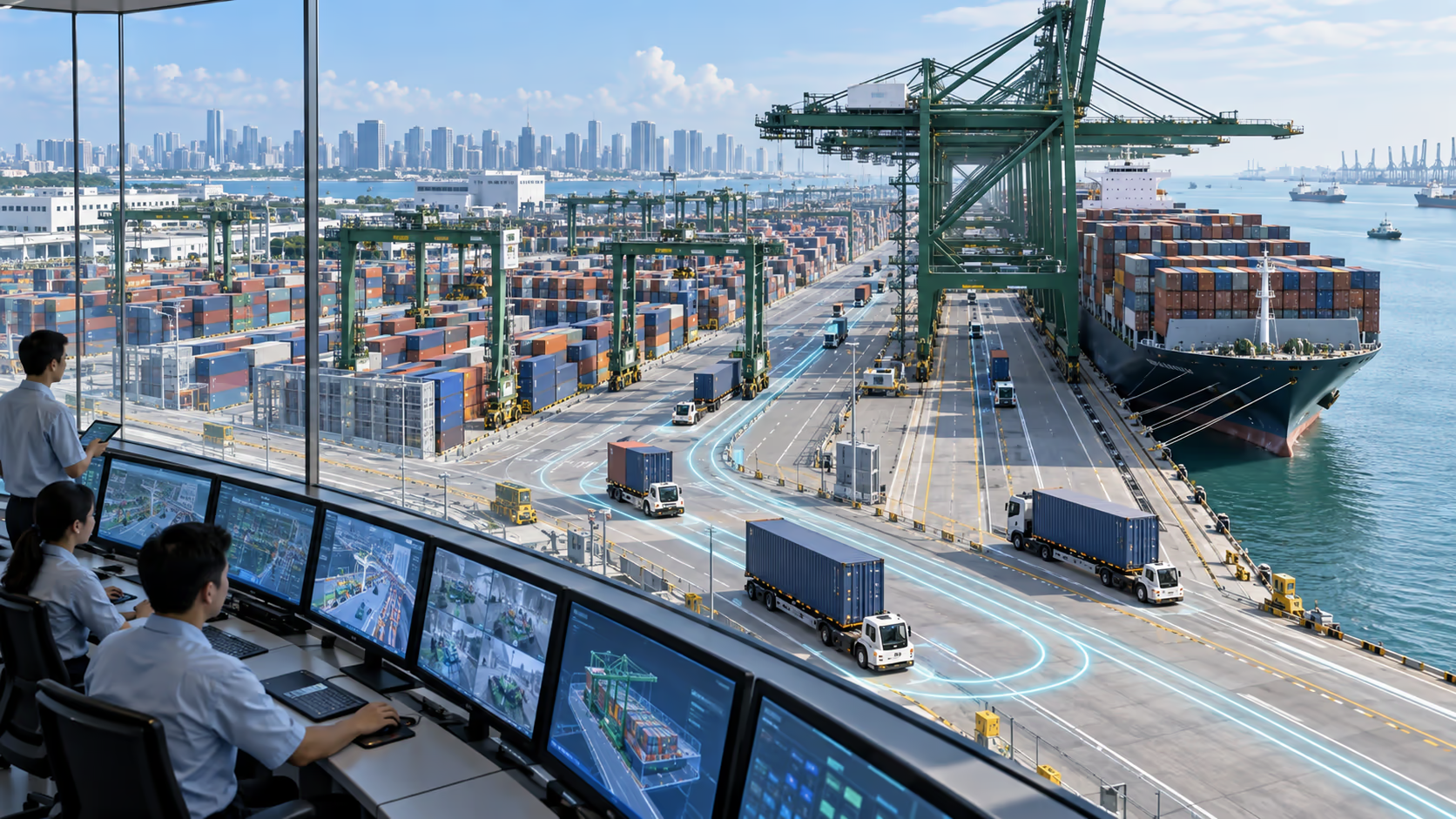
Food security is not only about growing more food; it is also about ensuring that food moves safely and efficiently from farm to consumer. Singapore’s heavy reliance on imported produce makes supply chain resilience a critical concern. A single contamination event or logistics failure can disrupt supplies for days. In response, a new generation of agritech startups is using blockchain, artificial intelligence, and IoT sensors to bring transparency to the food chain. DiMuto, a Singapore-based agri-fintech company, is one of the leading examples (https://www.dimuto.io/, accessed 2026). Its platform digitizes fresh produce trade by attaching QR codes, AI-powered quality checks, and blockchain records to every shipment.
Why Traceability Is Now a Food Security Tool
Traditional food supply chains often rely on paper records and fragmented databases. When a recall happens, tracing the source can take days. Blockchain solves this by creating an immutable, shared ledger that records every transaction and movement. For Singapore, which imports food from more than 170 countries, this level of traceability is no longer a luxury. It allows regulators and retailers to verify origin, storage conditions, and handling practices in near real time. Improved traceability reduces food fraud, speeds up recalls, and builds consumer trust.
Startups Leading the Data-Driven Supply Chain
AI and Predictive Analytics
DiMuto’s platform uses computer vision to grade fruit and vegetables, while blockchain captures trade documents and payment milestones. Agridence applies digital tools to agricultural commodity trading, improving price discovery and supply chain visibility. Glife Technologies connects farmers with restaurants and wholesalers through a digital marketplace, using data to match supply with demand. These startups demonstrate that Singapore’s agritech sector extends far beyond farming. It is building the digital infrastructure needed to manage complex global food networks.
Reducing Food Loss with Smarter Logistics
Food loss is a major hidden cost of supply chains. Poor temperature control, delayed deliveries, and inaccurate demand forecasts cause tonnes of fresh produce to spoil before reaching consumers. Singapore startups are tackling this by embedding IoT sensors in cold chain logistics. These sensors monitor temperature and humidity continuously, sending alerts when conditions deviate. Predictive models then reroute shipments or adjust inventory levels. The result is less waste, lower costs, and a more stable food supply. For a country that imports almost everything it eats, reducing post-harvest loss is a direct way to improve food security without increasing production.
The 2026 Outlook
Integration with government food safety databases and green finance initiatives is expected to accelerate. Banks and insurers are beginning to use blockchain-based traceability data to offer better trade financing terms to farmers and exporters. As data standards mature, Singapore could become a regional hub for agri-food data services, exporting its digital supply chain solutions to neighboring countries. That would reinforce its role as a food security innovator, not just a consumer of imported food.










Leave a Reply