

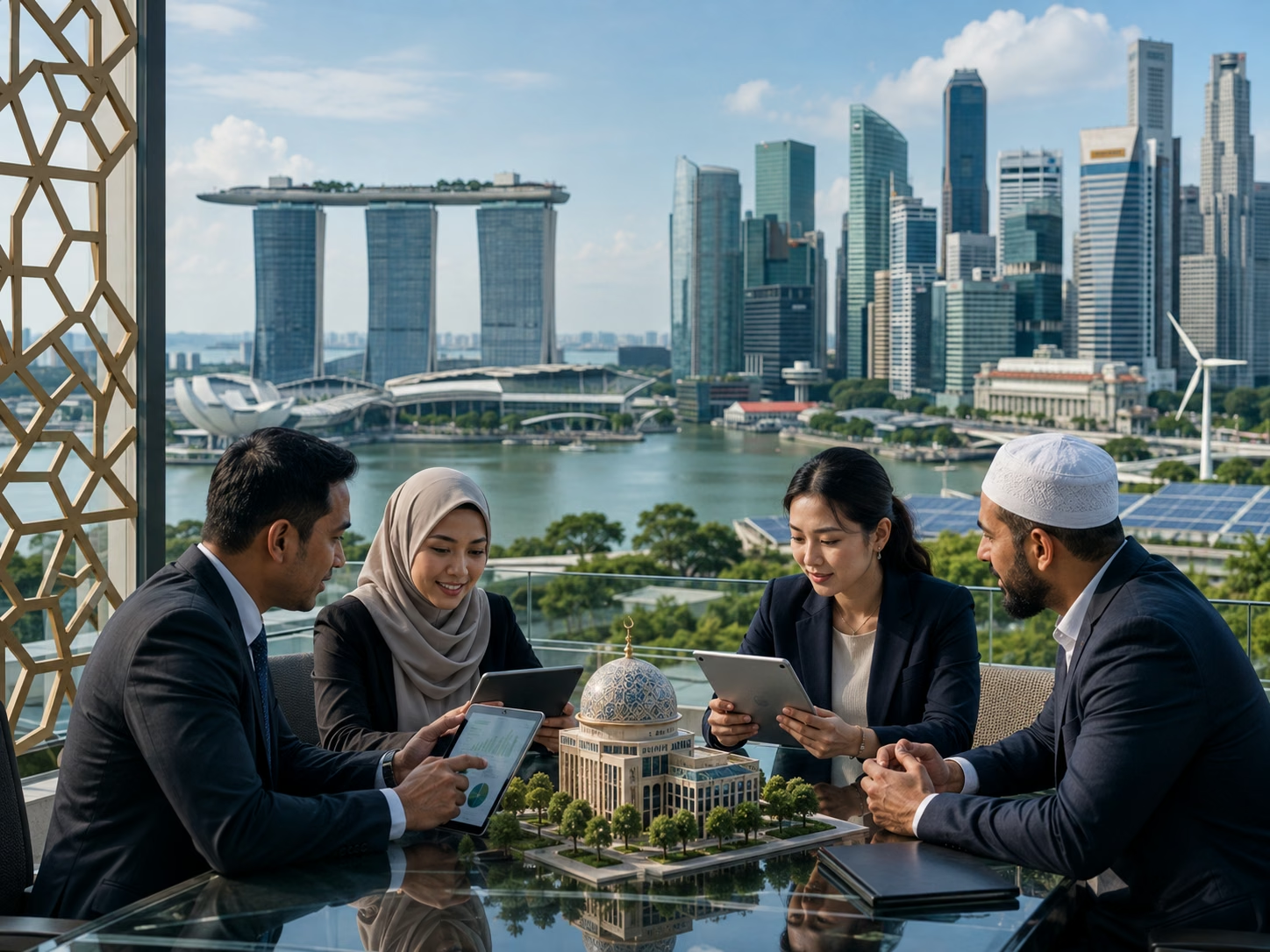
Equity investment is often the engine of growth for any portfolio, and for the Halal-conscious investor, Singapore offers a curated universe of stocks that pass strict religious filters. The Singapore Exchange (SGX) hosts a range of companies, from blue-chip REITs to tech manufacturers, that are deemed compliant with Islamic law. The process of identifying these stocks, however, requires a rigorous screening methodology that goes beyond surface-level business activities. This article explores how investors can effectively navigate the Singaporean equity market to build a robust and pure Halal stock portfolio.
The Science of Shariah Screening
The backbone of Islamic equity investing lies in the screening process. Companies are first screened for their core business. Entities involved in riba (interest), gharar (excessive uncertainty), gambling, alcohol, pork, or conventional arms are strictly excluded. However, the nuance lies in financial ratio screening. In a modern economy, almost every company deals with some form of interest (e.g., holding cash in banks or taking loans).
To address this, scholars permit investment if the non-compliant income is below a specific threshold—usually 5% of total revenue. Furthermore, financial ratios concerning debt (typically debt-to-assets must be below 30-33%) and cash/interest-bearing securities must be within acceptable limits. Singapore’s financial data infrastructure makes this screening transparent and efficient, allowing index providers to regularly update the list of compliant stocks.
Sector Analysis: Where the Halal Growth Is
Historically, the Singapore market was dominated by the “Big Three” banks (DBS, OCBC, UOB), which are non-compliant due to their interest-based business models. This exclusion historically skewed Shariah portfolios toward industrial and real estate stocks. However, the landscape is diversifying. The technology and healthcare sectors are emerging as major players in the Islamic index. Companies involved in semiconductor manufacturing, logistics technology, and medical equipment often pass the screens easily due to their low debt levels and clean revenue streams. These sectors offer the high growth potential that investors often miss when they exclude financials.
Dividend Yield vs. Capital Growth
Many Halal investors are drawn to the SGX for its high dividend yields, particularly within the Shariah-compliant REIT sector. However, a sophisticated 2026 strategy involves balancing these yield instruments with growth stocks in the tech sector. By diversifying within the compliant universe, investors can hedge against inflation while maintaining income stability.
To assist investors, the SGX publishes regular reports on its index performance. According to recent market data available on the SGX website, Shariah-compliant indices in Singapore have shown resilience during market downturns, largely due to their lower debt ratios and emphasis on tangible assets—a testament to the inherent stability of the Shariah screening process.











Leave a Reply