

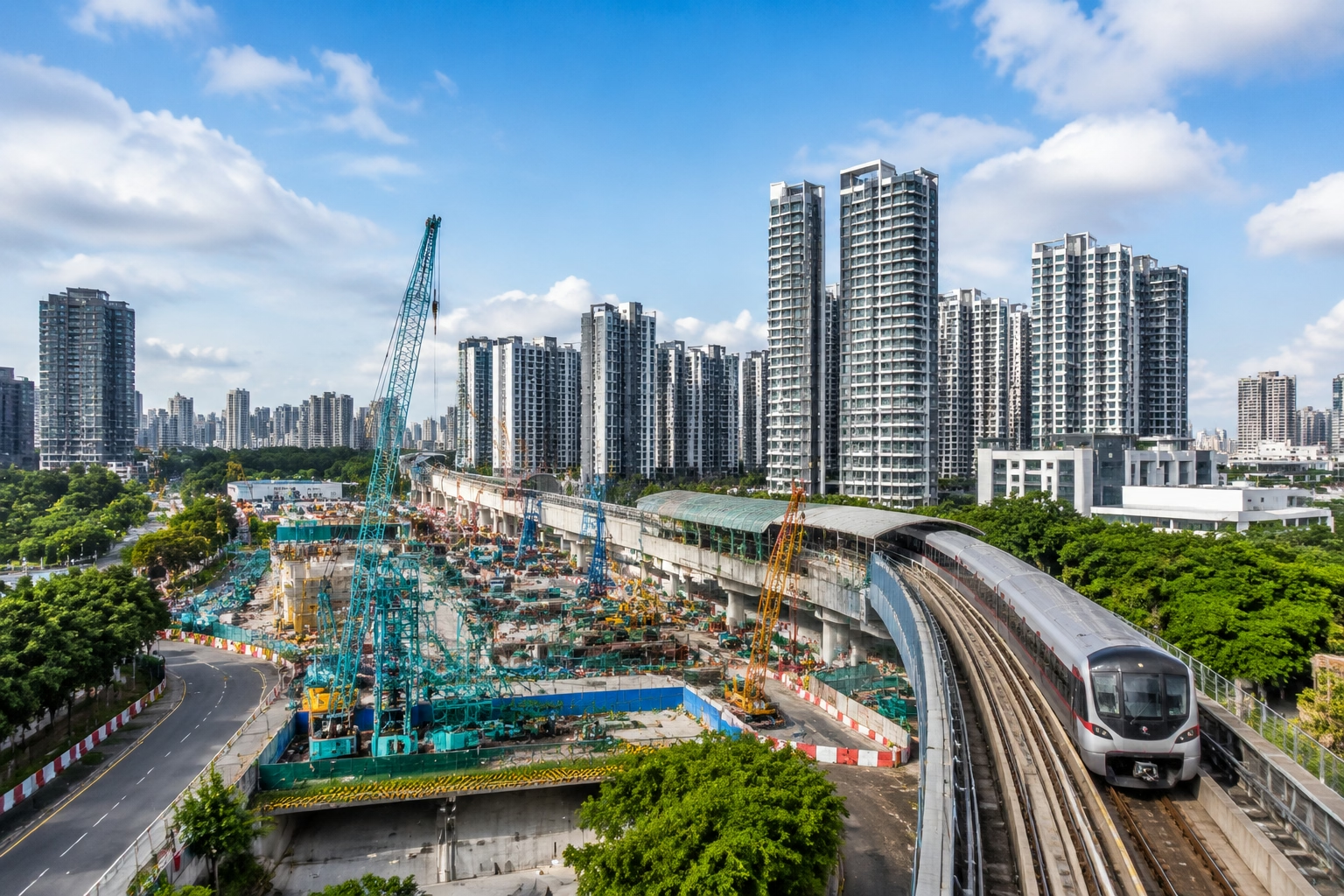
Singapore’s reputation as a “city in a garden” is not solely the result of visionary urban planning; it is the result of visionary financing. While private corporations issue bonds to expand their business, the state’s strategic growth is often funded through bonds issued by statutory boards. These entities, operating under the purview of the government, are at the forefront of infrastructure development. Their ability to tap the debt market is the mechanism by which blueprints for new rail lines, public housing estates, and water treatment plants become tangible reality.
The Mechanics of State-Owned Financing
Statutory boards such as the Housing & Development Board (HDB) and the Land Transport Authority (LTA) are among the most significant issuers in the local bond market. These entities are not simply government departments; they are self-financing operations. They issue bonds to cover the massive upfront capital expenditure required for their projects, with the expectation that future operating revenues will service the debt.
This model creates a powerful discipline. Because these boards must access the capital markets regularly, they are subject to the scrutiny of bond investors. They must maintain strong financial health, project transparency, and effective operational management. This market-driven accountability ensures that public funds are used efficiently, and that only viable projects are pushed forward. The capital raised via these bonds has funded the expansion of the MRT network and the ongoing construction of new towns like Tengah.
The Credit Strength of Statutory Boards
One of the reasons these bonds are popular with investors is their implicit strength. While not technically guaranteed by the government, the market perceives the default risk of an entity like LTA to be virtually non-existent. The government is the sole shareholder, ensuring that these institutions are “too big to fail.”
This high credit rating allows statutory boards to borrow at very tight spreads over the SGS benchmark. For investors, this represents a “yield pick-up”—a chance to earn slightly more than a government bond while maintaining an extremely high level of safety. Insurance companies and pension funds with long-term liabilities find these instruments perfectly suited for matching their obligations.
Case Study: The Transport Infrastructure Boom
The transport sector provides the clearest illustration of this dynamic. The Cross Island Line (CRL), one of Singapore’s most ambitious underground projects, requires billions of dollars in funding. LTA has consistently tapped the bond market to finance this expenditure. By utilizing bonds, LTA can spread the cost of the railway over thirty or forty years, ensuring that the financial burden is shared across the generations of commuters who will benefit from the service.
This strategy prevents the government from having to raise taxes sharply to pay for infrastructure upfront. It is a sophisticated intergenerational equity mechanism. In 2026, the volume of bonds issued by these agencies remains a key indicator of the nation’s infrastructure trajectory. For detailed historical data on issuance volumes and project financing, the Singapore Government’s official data portal provides access to statutory board financial statements and bond issuance records.
The bond market, therefore, is the silent partner in Singapore’s urban development. It provides the firepower for the construction cranes that dominate the skyline and the tunnels that run beneath the streets. By bridging the gap between capital markets and public policy, statutory board bonds ensure that Singapore’s physical infrastructure continues to match its economic ambition.














Leave a Reply