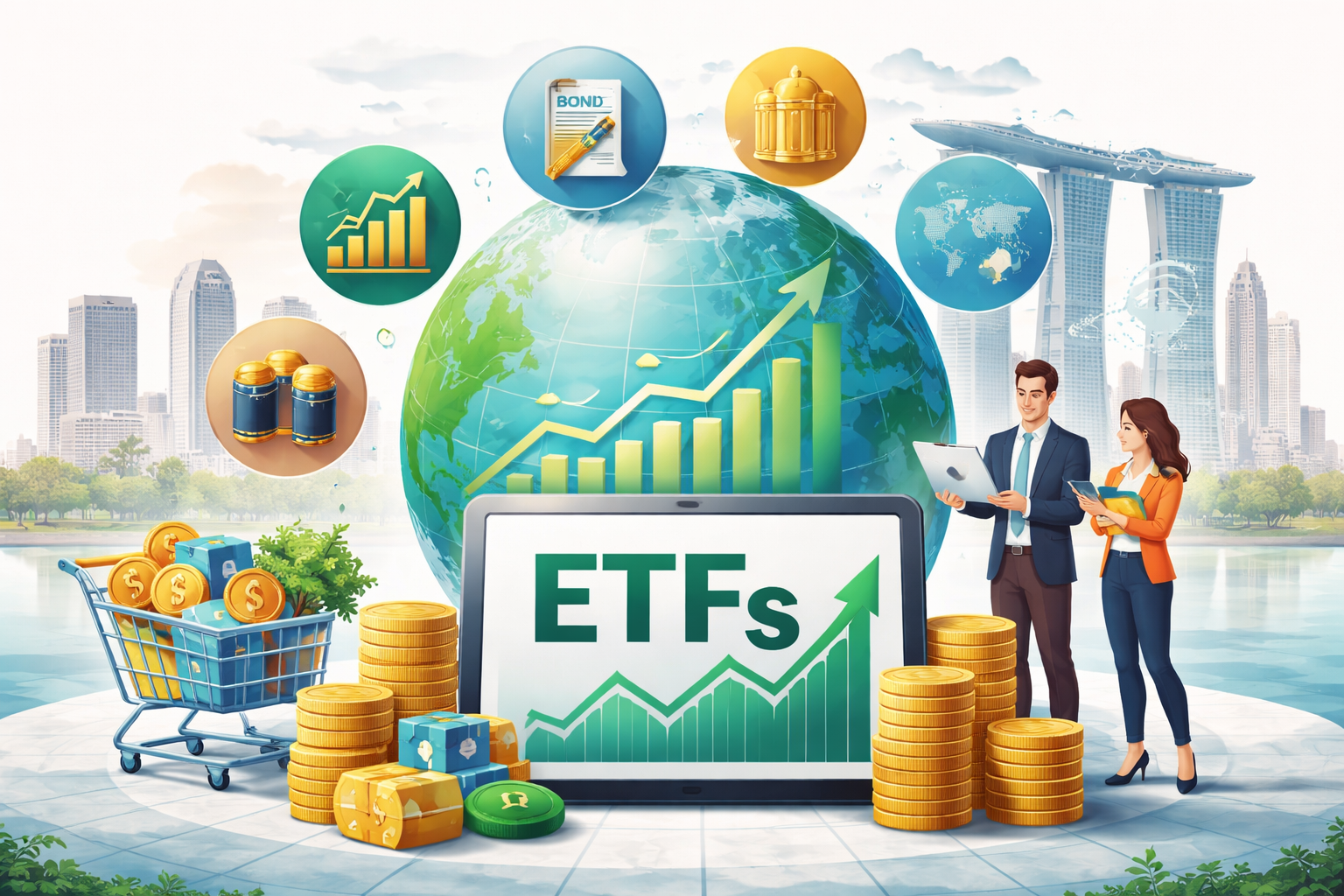
Diversification is a core principle of sound investing, and in Singapore, Exchange-Traded Funds (ETFs) have emerged as a popular and efficient way to achieve it. ETFs offer investors an easy means of gaining exposure to a wide range of asset classes, sectors, and global markets, all within a single investment. This makes ETFs an attractive choice for anyone looking to build a diversified investment portfolio.
ETFs are investment funds that hold a collection of assets, such as stocks, bonds, or commodities. These funds are typically designed to track a specific index or sector, providing broad market exposure. By investing in an ETF, investors can gain access to numerous securities at once, reducing the risk of individual stock investments. This diversification helps to smooth out volatility and reduce the overall risk of the portfolio.
In Singapore, local ETFs provide an excellent way for investors to access the domestic market. The SPDR STI ETF, which tracks the Straits Times Index (STI), is one of the most popular ETFs in the country. By investing in this ETF, Singaporean investors can gain exposure to the top 30 companies listed on the Singapore Exchange, spreading their risk across various industries such as finance, real estate, and telecommunications.
But the benefits of ETFs extend far beyond the local market. International ETFs allow investors in Singapore to diversify their portfolios globally. For instance, the Vanguard FTSE All-World ex-US ETF provides exposure to international stocks, while the iShares MSCI Emerging Markets ETF offers access to developing economies. These ETFs help investors capture global growth and reduce the impact of poor performance in any single market.
One of the key advantages of ETFs is their cost efficiency. Since ETFs are usually passively managed, they tend to have lower management fees than actively managed mutual funds. Additionally, the rise of online brokerage platforms in Singapore has made trading ETFs even more affordable, with low or zero commission fees available for many transactions.
ETFs also offer high liquidity, allowing investors to buy and sell shares throughout the day at market prices. This provides flexibility for those who need to quickly adjust their investment strategies based on market conditions. Unlike mutual funds, which are priced once a day, ETFs can be traded whenever the markets are open.
In Singapore, the regulatory environment ensures that ETFs meet high standards of transparency and investor protection. The Monetary Authority of Singapore (MAS) oversees the financial markets, ensuring that ETFs listed on the Singapore Exchange are properly regulated. This provides investors with confidence in the safety and reliability of ETFs available in the country.
While ETFs offer many advantages, investors must also consider certain risks. The value of an ETF is tied to the performance of the underlying assets, so a downturn in the market or sector it tracks will affect the ETF’s value. Additionally, investors should be mindful of the expense ratio, as even small differences in fees can add up over time.
Currency risk is another consideration, particularly for those investing in international ETFs. Fluctuations in exchange rates can affect the returns on investments, especially if the ETF is based in a different currency than the Singapore dollar.
Overall, ETFs provide a highly effective way for investors in Singapore to diversify their portfolios. Their low costs, ease of trading, and ability to provide exposure to both local and international markets make them a valuable tool for building a well-rounded investment strategy. With careful planning and consideration of the associated risks, ETFs can be a powerful addition to any investor’s portfolio.