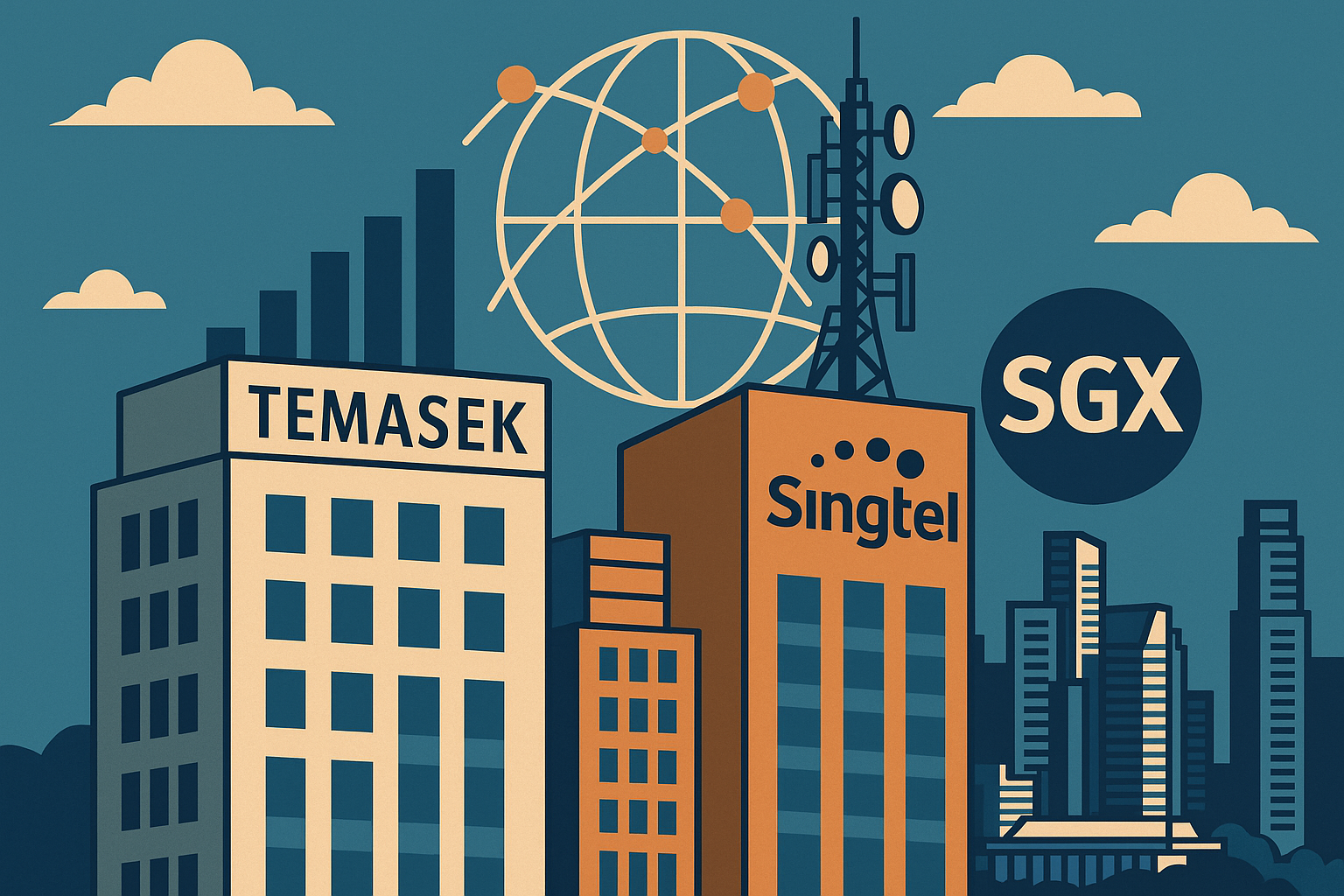
The relationship between Temasek and Singtel is often cited as a textbook example of “Singapore Inc.” in action: the idea that state-linked capital, disciplined corporate governance, and market mechanisms can work together to drive growth and resilience. Looking at how these two entities operate provides insight into the development of the Singapore stock market and its positioning in the global investment landscape.
Temasek plays a unique role as both an owner and an active investor. Its portfolio, spanning financial institutions, infrastructure, technology, consumer, and industrial companies, can be seen as a macro-level expression of Singapore’s long-term economic strategy. By allocating capital across sectors and geographies, Temasek seeks not only attractive returns but also diversified exposure that reduces vulnerability to any single shock. Environmental, social, and governance (ESG) considerations have become increasingly prominent in its decision-making, reflecting global investor expectations and domestic policy priorities.
Within this framework, Singtel is one of Temasek’s flagship holdings in the communications and digital infrastructure space. As a listed company, Singtel must adhere to SGX rules on disclosure, reporting, and corporate conduct. It also responds to analyst coverage, investor roadshows, and the constant feedback mechanism of a live share price. Temasek’s stake ensures alignment with national interests and long-term planning, but the stock exchange ensures external scrutiny and the possibility of dissenting views from other shareholders.
This dual accountability has helped shape Singtel’s evolution. On one hand, it has been encouraged to think beyond the constraints of a small domestic market, building regional scale and investing in future technologies. On the other, it has been required to articulate clear strategies, justify capital expenditure, and maintain a balance between reinvestment and shareholder returns. The outcome is a company that is simultaneously a national champion and a global competitor, subject to market disciplines.
From the perspective of the SGX, having companies like Singtel in the benchmark index enhances the market’s appeal to international investors. Singtel offers exposure to Asian connectivity and digital trends through a well-regulated, investable jurisdiction. Temasek’s presence as a cornerstone investor can be reassuring, signaling that governance, risk oversight, and long-term viability are priorities. This combination has helped Singapore maintain its reputation as a stable, high-quality market within the broader Asia-Pacific region.
Temasek’s indirect influence on the market extends beyond its immediate holdings. Portfolio changes—such as increasing stakes in technology or decarbonization plays, or trimming exposure to mature sectors—can catalyze shifts in investor sentiment and capital flows. Market participants often analyze Temasek’s annual portfolio updates to infer where opportunities and risks might lie in the regional economy. Singtel, as a high-profile portfolio company, features prominently in these discussions.
Looking ahead, both Temasek and Singtel face evolving challenges. Temasek must navigate a world of geopolitical fragmentation, climate risk, and rapid technological change while sustaining long-term returns. Singtel must continue to modernize networks, monetize data and digital assets, manage regulatory pressures in multiple countries, and adapt its business model to new forms of competition. How they respond will influence not only their own performance, but also perceptions of Singapore’s economic strategy and the attractiveness of its equity market.
For investors, studying Temasek and Singtel together is therefore about more than understanding a single shareholder relationship. It is a way to see how state capital, market institutions, and corporate strategy interact in a small, open economy that punches above its weight in global finance.